Amps to kVA Calculator
Accurate kVA calculations are critical to transformer sizing. Use this calculator to determine the correct transformer specifications for your build.*
*We recommend sizing transformers with an additional 25% capacity for optimal efficiency, longevity, and performance during peak loading.
How to use the kVA calculator
Single phase formula
Three phase formula
When to use the Amps to kVA Calculator
Common applications for our Amps to kVA Calculator:
- Sizing three-phase padmount transformers for data centers
- Determining transformer capacity for bitcoin mining sites
- Verifying specifications for commercial and industrial electrical installations
- Quick field calculations for electrical contractors and estimators
- Validating distributor quotes
Not sure what you need? Our application engineers can help size transformers for specialized loads, including those with harmonic (K-factor) considerations or unbalanced phases.
Get in touch with our team of experts for personalized sizing calculations and assistance.
Beyond kVA: What else do you need to specify a transformer?
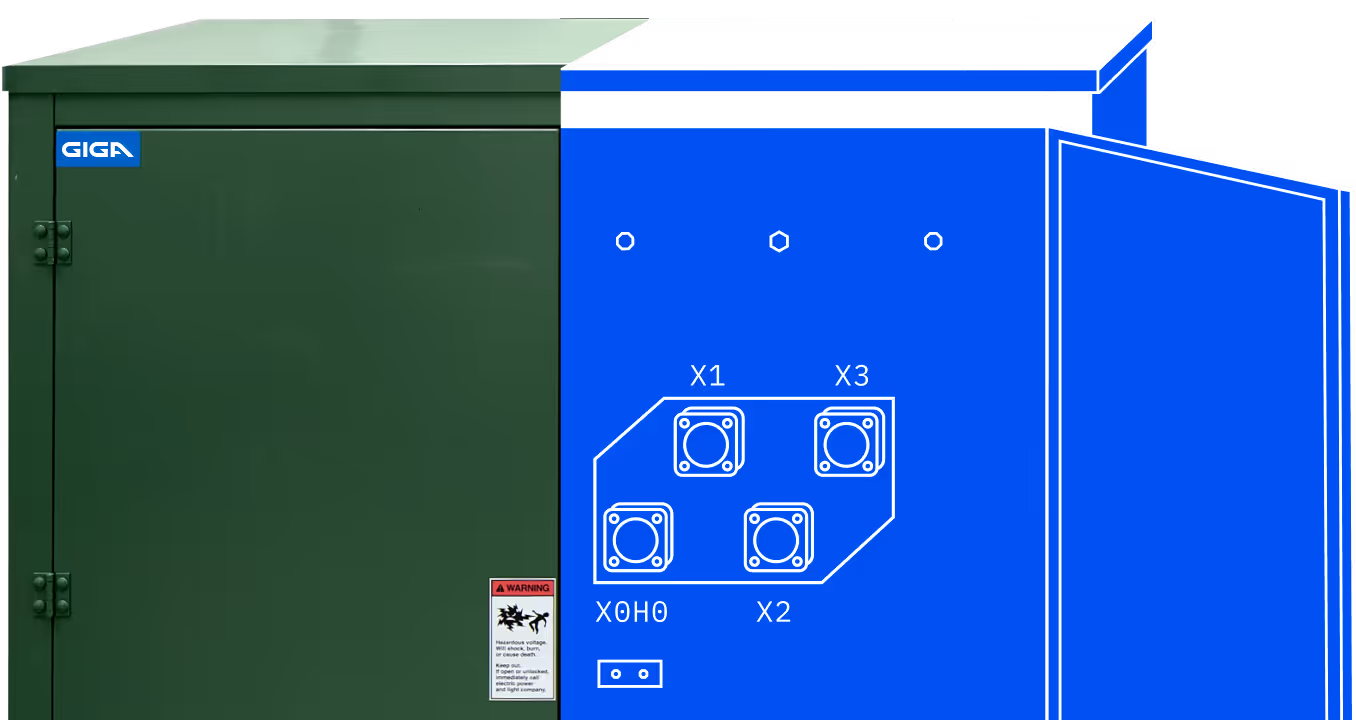
Before specifying the right transformer for your build, you’ll need to prepare the following:
- Primary voltage
- Secondary voltage
- Service entrance configuration
- Installation environment
- Any special requirements, such as seismic certification, FR3 fluid, etc.
Ready to specify your transformer?
Build a quote: Submit your specifications for same-day pricing
Talk to our team: Not sure what you need? Schedule a consultation
Browse inventory: Check our in-stock transformers
After using the Amps to kVA Calculator: What’s next?
Calculating kVA is only the starting point for transformer sizing. Other key considerations and calculations to keep in mind:
- Voltage configuration: Verify whether your 3-phase low and high voltage configurations need to be delta or wye (star).
- Service entrance requirements: Loop feed vs. radial feed, LBOR switches, and redundancy provisions can impact your transformer selection.
- Load characteristics: Data centers and mining operations often introduce harmonics and may require K-factor-rated transformers or additional derating.
- Lead time: Standard lead times can run over 30 weeks or longer for custom builds. Work with Giga Energy for faster lead times and reliable, American assembly.
When you work with Giga Energy, our engineering team reviews every order to catch potential issues before manufacturing starts.
Calculator variables & definitions
Below are the definitions for the different terms that this calculator uses
How accurate is this calculator?
Electric potential, measured in volts (V), indicates how much electrical potential energy exists per unit of charge at a specific point in a circuit. This difference in potential—called voltage—is what drives electric charges to move through the circuit.
What is kVA?
kVA, or kilovolt-ampere, is a unit of apparent power in an AC (alternating current) electrical system. It represents the combination of both real power (used to perform work) and reactive power (used to sustain electric and magnetic fields).
What are Amps?
Amps, short for amperes, measure the electric current in a circuit—that is, the rate at which electric charge flows through a conductor.
What is a transformer?
A transformer is an electrical device that changes voltage levels from one value to another. It can either step voltage up (increase) or step it down (decrease), depending on the application.
Amps to kVA Calculator FAQs
How accurate is this calculator?
This calculator provides apparent power (kVA) based on voltage and current. For real-world applications, factor in power factor, load factor, and harmonics if applicable.
What's the difference between kVA vs kW?
kVA measures apparent power, whereas kW measures real power. The relationship between these two figures is your power factor. Industrial loads and data center cooling equipment often operate at a power factor below 1, which is why transformers are rated in kVA.
Should I size my transformer at the full calculated load?
No. Standard practice is to size 20-30% above the calculated load to account for future expansion, temperature variations, and other factors.
Can I run multiple loads on one transformer?
Yes, but each feeder requires proper overcurrent protection, and the combined load cannot exceed the transformer's rated capacity. Consult with our engineering team for complex distribution configurations.
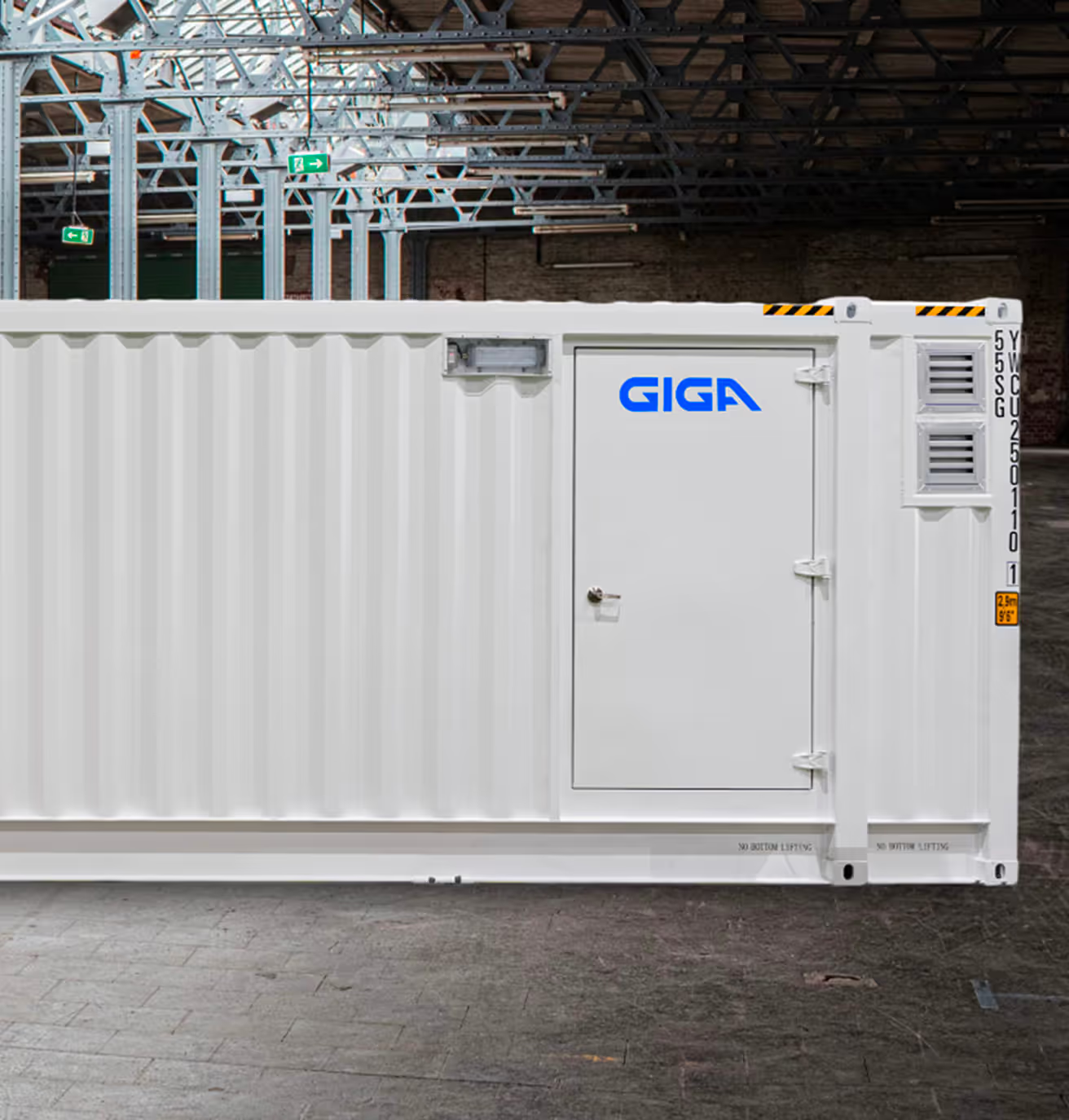
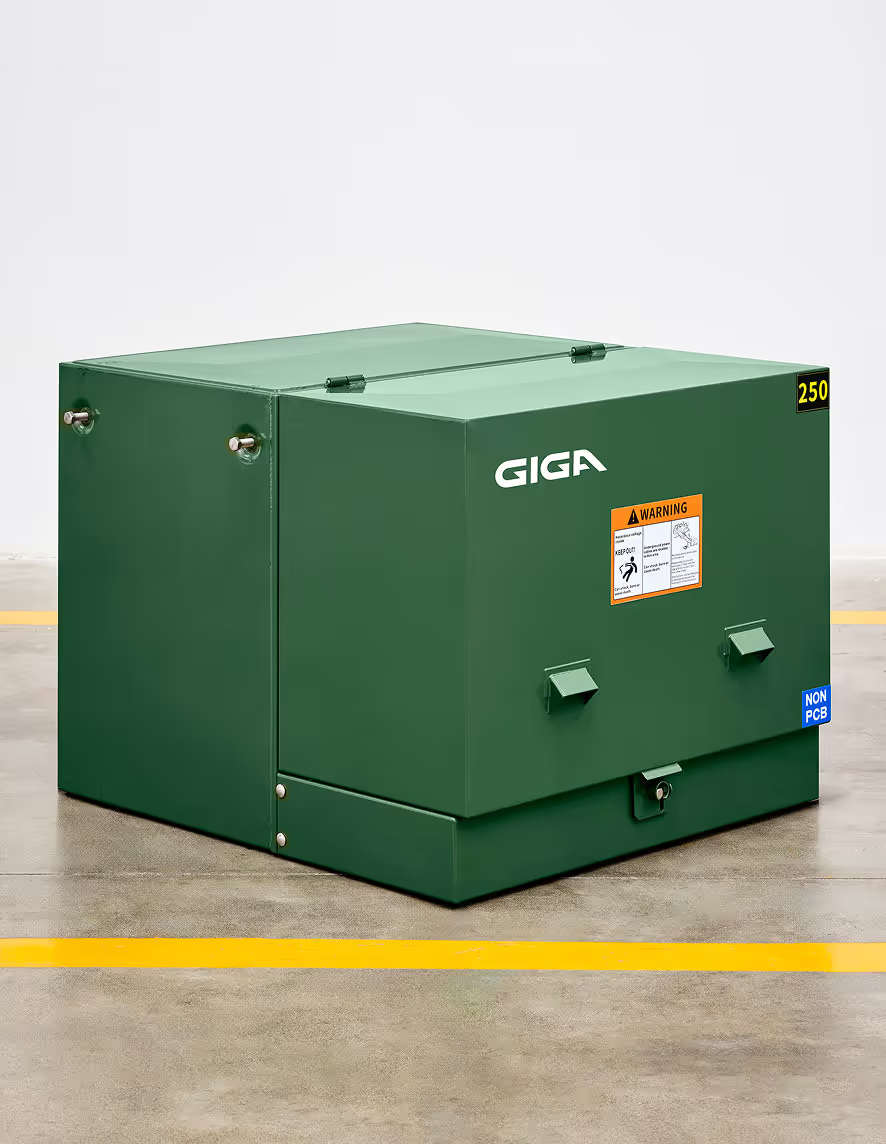
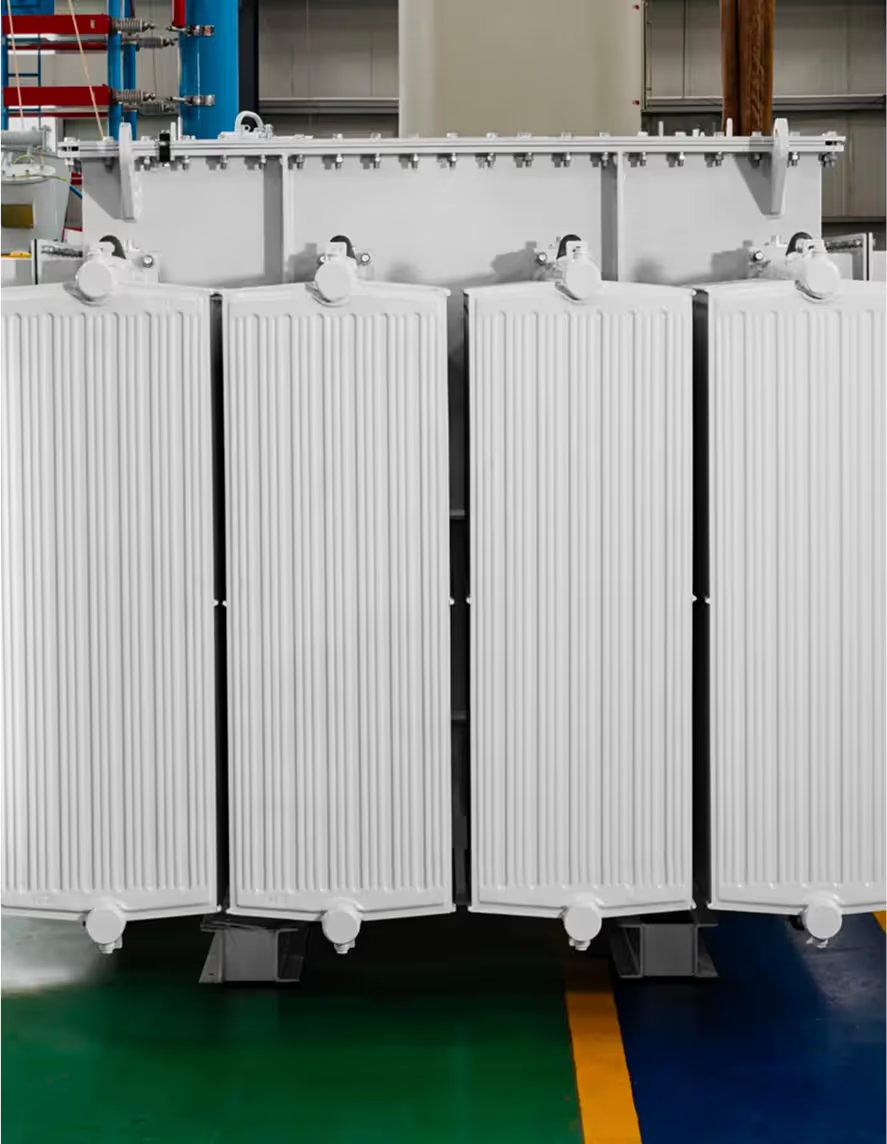
Explore other product lines
Our extensive selection of custom-built solutions and comprehensive inventory ensures that we can provide the ideal equipment to power your projects.
Other Calculators
Let’s build what’s next together.